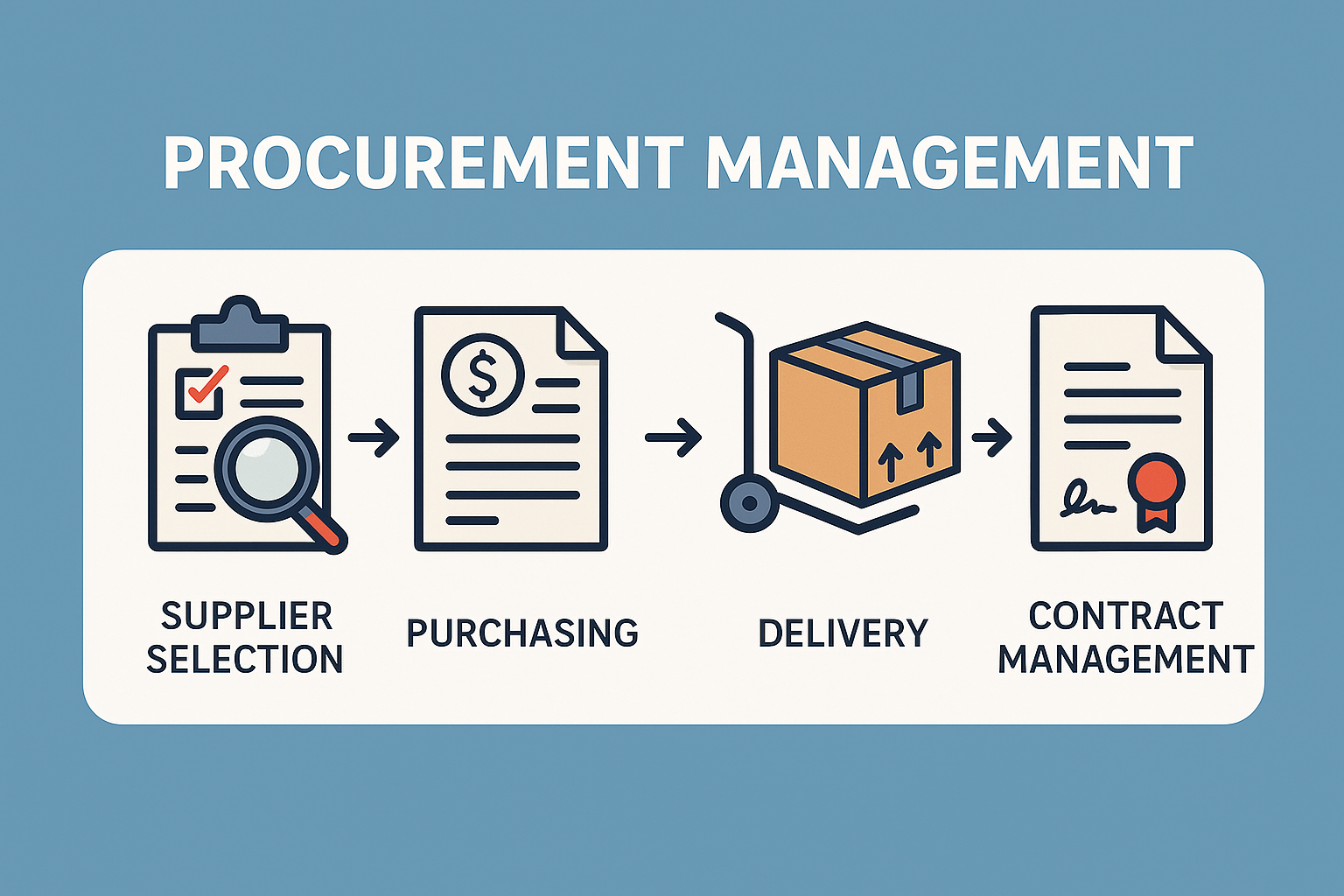
The role of efficient procurement in the business world can hardly be overestimated, and the area of government and infrastructure areas is not a single exception. Procurement management helps to achieve the acquisition of goods, services, and works within the timely and cost-effective manner. Procurement management makes organizations be on track, on time, on budget and rule abiding through buying raw materials, acquiring vendors and conducting tenders. We believe that procurement management is a crucial component in the quest of any business to compete in the dynamic business environment particularly in the public sector at Tender 18. Herein we demystify what procurement management is, its importance, and how companies can streamline their procurement processes.
Get Procurement Management Guidance, Tender Registration Support & Tender Bidding Assistance Call - +91 7069661818 |
|---|
A procurement management is described as the strategic process of planning, purchasing and handling the items and services used by a business or an agency of the government. It also entails the process involving the determination of a certain need, supplier locating, contract negotiation and the supervision of the goods or services chapiter para. Procurement management is not merely the process of buying at the lowest price but must provide the most value to the organization as well as be transparent, compliant and efficient in the process.
Procurement management encompasses several interconnected activities. Here are the main components:
This is the initial stage where the organization identifies its needs and defines a procurement strategy. It includes determining what needs to be purchased, when it is required, and the estimated budget.
Once needs are defined, the next step is to identify potential suppliers. This can involve issuing tenders (especially in public sector procurement), evaluating proposals, and shortlisting qualified vendors.
A formal tender process ensures transparency and competitiveness. After evaluating bids or proposals, contracts are awarded to the most suitable vendor. Contract negotiations cover terms, pricing, delivery timelines, and penalties.
Once the contract is signed, the organization issues purchase orders. Vendors are then responsible for delivering the goods or services within agreed timelines.
Before payment is released, it is essential to verify that the deliverables meet the required standards. This step ensures value for money and mitigates disputes.
Payments are processed once quality and delivery are confirmed. Proper documentation and records must be maintained for audits and future reference.
Procurement doesn’t end with delivery. Reviewing vendor performance and maintaining long-term relationships help streamline future procurement activities.
Procurement management offers a wide range of benefits for organizations, particularly those operating in sectors with high compliance standards like government and infrastructure.
Strategic procurement helps minimize unnecessary expenses, achieve bulk discounts, and negotiate better contract terms.
Procurement processes help identify potential risks (e.g., supply chain disruptions, vendor default) early on and plan accordingly.
In public procurement, transparency is vital. Proper procurement management ensures that processes are fair, open, and documented, reducing chances of corruption or favoritism.
Ensuring the timely availability of required resources supports seamless operations and prevents costly delays in projects.
Public procurement is governed by strict rules (like GFR, CVC guidelines, GeM norms in India). Adhering to these ensures legal and procedural compliance.
In India, government procurement accounts for a significant portion of the national GDP. Various departments and PSUs publish tenders through platforms like:
Central Public Procurement Portal (CPPP)
GeM (Government e-Marketplace)
State Government eProcurement portals
Railways, Defense, PWD, and more
At Tender 18, we provide real-time updates and notifications about the latest tenders from across India. We empower suppliers to understand eligibility, prepare documentation, and respond effectively to tenders—maximizing their chance of winning government contracts.
While the benefits are numerous, procurement management also comes with challenges:
Without proper processes, corruption and favoritism can undermine fairness, especially in public tenders.
Slow internal approvals can delay procurement and project timelines.
Late delivery, substandard quality, or price escalation can affect project outcomes.
Staying up-to-date with changing tender rules and procurement guidelines is critical but complex.
Failure to forecast needs or manage inventory leads to emergency purchases at higher costs.
Tender 18 offers tools and consultancy to help businesses overcome these hurdles and navigate procurement challenges successfully.
Organizations can streamline procurement by adopting these best practices:
Clearly defined procurement rules help maintain consistency and transparency across departments.
Digital procurement platforms like GeM improve transparency, reduce paperwork, and accelerate decision-making.
Treat vendors as strategic partners. Nurture relationships that are based on trust, performance, and mutual benefit.
Track procurement metrics like cost savings, supplier delivery time, contract compliance, and customer satisfaction.
Equip your team with up-to-date knowledge about tender procedures, vendor management, and regulatory changes.
At Tender 18, we simplify government procurement for businesses of all sizes. Our platform offers:
Daily tender alerts by industry and location
Bid preparation and documentation support
Consultancy for GeM registration and compliance
Tender tracking, result updates, and analytics
Assistance in understanding eligibility and qualifying criteria
Whether you're a new business trying to enter the government market or an experienced vendor looking to scale, Tender 18 is your trusted partner in procurement success.
Procurement management is not a mere procurement of goods but a well outlined method of getting the right resources, at the right place, at the right price at the right moment. Procurement management is one of the most important ways to excel, with regard to growth, compliance, and competition of businesses within the government tendering ecosystem. Through technology, best practices, and being aware of tender opportunities available in the market through channels such as Tender 18, a business can improve its procurement strategy and get more contracts.
