Government procurement creates opportunities for businesses across different industries. Every year, government departments, public sector organisations, and institutions release tenders for infrastructure projects, technology solutions, equipment supply, maintenance services, and other requirements.
For businesses, finding the right tender opportunities depends on understanding which sectors have regular government demand and what type of products or services are required.
This guide explains the top sectors with government tender opportunities in India, the type of requirements these industries usually have, and how businesses can prepare before participating.
Government tender opportunities are procurement requirements published by government organisations when they need products, services, or project execution support.
Instead of directly selecting suppliers, government departments usually invite businesses to submit bids through a transparent procurement process.
Common requirements include:
Businesses can search relevant opportunities based on their industry, location, eligibility, and technical capabilities.
Companies looking for suitable opportunities can explore current government tender opportunities based on their business category.
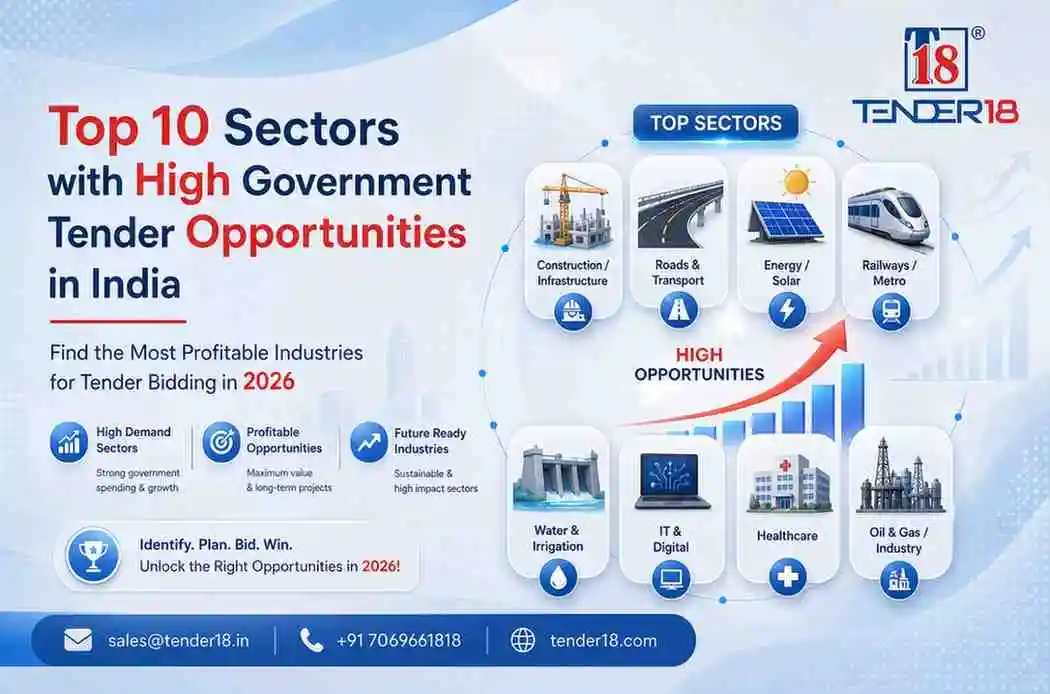
Construction is one of the largest sectors for government procurement.
Government organisations regularly release tenders for:
Businesses involved in construction, engineering, material supply, and project management can find opportunities in this sector.
Common requirements include:
Companies participating in infrastructure tenders usually need proper technical qualifications, financial documents, and previous project experience.
Digital transformation has increased demand for IT-related government procurement.
Government organisations require technology solutions for:
IT companies can participate in tenders related to technology implementation and maintenance services.
Businesses should carefully review technical specifications because government IT tenders often include detailed compliance requirements.
Healthcare is another sector with regular government procurement.
Government hospitals, healthcare institutions, and departments require:
Medical suppliers and healthcare companies can explore opportunities by understanding product specifications, certifications, and delivery requirements.
The power sector creates opportunities for suppliers, contractors, and service providers.
Government requirements may include:
Companies working in electrical engineering and energy solutions can participate in these procurement opportunities.
Transportation-related government requirements cover a wide range of services.
Common tender requirements include:
Businesses in transportation and logistics can find opportunities by monitoring relevant procurement categories.
Government departments and public sector organisations require various industrial products and equipment.
Manufacturing-related tenders may include:
Manufacturers with proper quality certifications and production capacity can participate in these opportunities.
The education sector also receives government procurement requirements.
Opportunities may include:
Businesses providing education-related products and services can participate in suitable tenders.
The defence and security sector involves specialised procurement requirements.
Government organisations may require:
Businesses entering this sector usually need to meet strict technical and compliance requirements.
Environmental projects have become an important area of government procurement.
Tender opportunities may include:
Companies working in environmental technology and infrastructure can explore opportunities in this sector.
Agriculture-related government procurement supports farmers, institutions, and food supply systems.
Common requirements include:
Businesses involved in agriculture and food industries can participate in relevant procurement opportunities.
Finding the right tender requires more than searching for opportunities. Businesses should evaluate whether a tender matches their capability before applying.
Important steps include:
Choose tenders related to your products or services.
Applying for unrelated tenders can waste time and resources.
Review:
Common tender documents include:
Before submitting an offer, businesses should understand bid submission steps, technical evaluation, and financial evaluation.
A proper understanding of the GeM bidding process can help sellers prepare better submissions and avoid common mistakes.
Always check whether your business meets the required conditions.
Understand the complete scope of work before preparing your quotation.
Consider:
Missing the deadline can result in automatic rejection.
Many businesses apply without reviewing qualification criteria.
This can lead to rejection.
Missing certificates or incorrect information can affect evaluation.
Government tenders often have detailed requirements.
Businesses should carefully review all technical conditions.
The lowest price is not always the only evaluation factor.
Technical compliance and eligibility also matter.
Government procurement requires regular monitoring and understanding of tender requirements.
Tender18 provides tender-related information to help businesses identify relevant opportunities and understand procurement requirements.
Businesses that need support with tender documentation, preparation, and submission can explore tender bidding services according to their requirements.
Government tender opportunities in India are available across multiple sectors, from infrastructure and technology to healthcare, manufacturing, and environmental services.
Businesses that understand their industry, monitor relevant opportunities, prepare proper documentation, and follow bidding requirements can improve their participation in government procurement.
The key is not applying for every tender but identifying opportunities that match your business capability and preparing a complete, compliant submission.
Looking For Complete Tender Bidding Consultancy? Our Technical Experts Will Help You Prepare And Submit Your Tender Successfully.