If you are planning to sell products or services to government departments, understanding GeM registration fees is one of the first things to check. The Government e-Marketplace (GeM) is an online procurement platform that connects government buyers with eligible sellers across India.
The basic GeM seller registration is free. However, businesses may have separate expenses related to documentation, product certifications, tax compliance, professional assistance, and applicable transaction-related charges. Understanding the difference between the registration fee and these other expenses can help businesses plan their entry into government procurement.
This guide explains GeM registration charges, the documents required for seller registration, the registration process, possible additional costs, and the important points businesses should know before starting on the platform.
GeM registration is the process of creating a seller account on the Government e-Marketplace. It allows eligible businesses to offer products and services to government departments, ministries, public sector organizations, and other eligible government buyers.
After completing registration, sellers can manage activities such as:
Businesses planning to start selling through GeM can review the GeM Registration process and understand the requirements before creating their account.
Yes, basic GeM seller registration is free.
The official GeM seller registration material states that seller registration has zero registration fees. It also advises sellers not to pay anyone for registration.
This means a business does not need to pay a mandatory registration fee simply to create a basic seller account.
However, free registration does not mean that every activity associated with selling on GeM is free.
A business may have separate expenses related to:
These costs depend on the seller, product category, business requirements, and applicable GeM policies.
Many businesses search for GeM registration charges without understanding the difference between registration fees and other costs.
| Cost Type | Meaning |
| Basic registration fee | Cost of creating the seller account |
| Transaction charges | Charges that may apply to eligible transactions |
| Annual milestone charges | Charges that may apply under the applicable revenue policy |
| Certification costs | Expenses for required product certifications |
| Documentation costs | Expenses related to obtaining or preparing documents |
| Professional service charges | Fees paid to private consultants for assistance |
The important point is that basic seller registration is free. Other charges depend on the seller's circumstances and the activity being performed on GeM.
When businesses search for GeM portal registration cost, they generally want to know how much they must pay to create a seller account.
For basic seller registration, the cost is zero.
However, the cost of preparing a business to sell on GeM can be different from the registration cost.
For example, one business may already have:
Another business may need to arrange some of these requirements before it can effectively operate as a seller.
Therefore, the total amount spent by a business before it starts selling can vary, even though the basic GeM registration itself is free.
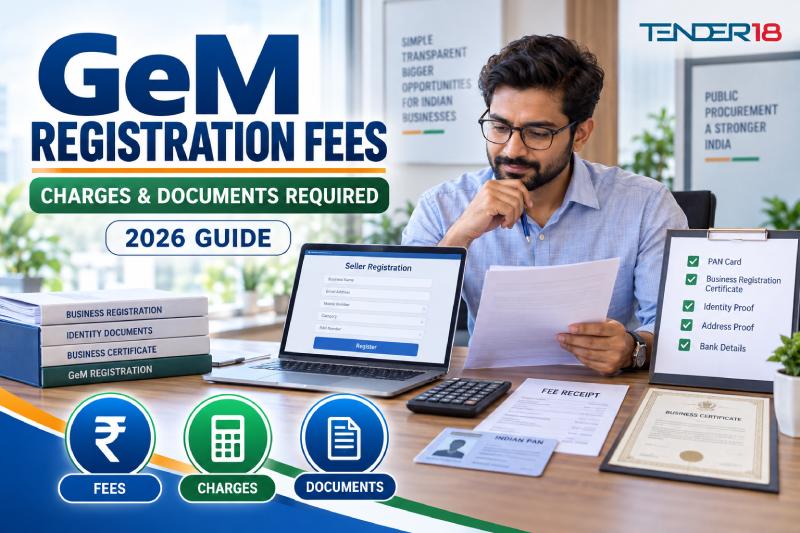
The GeM registration documents required depend on the organization type and the activities the seller intends to perform.
Businesses should keep their important documents and information ready before starting the registration process.
PAN is an important part of seller identification.
The applicable PAN requirement depends on the organization structure. The information provided should be accurate and match the relevant government records.
For example, the PAN requirements can differ between a proprietorship, firm, company, trust or society, and government organization.
The authorized person completing the registration may need Aadhaar or personal PAN information for verification.
When Aadhaar-based verification is used, the required mobile number should be accessible for verification.
Personal information should be entered exactly as it appears in the relevant official records.
An active email address is required during registration.
Businesses should use an email account that the authorized person can access regularly because important account-related communication may be sent there.
A valid mobile number is required for the applicable registration and verification process.
Businesses should use an active number that can be accessed throughout the registration process.
Sellers need to provide information about their organization type and business registration.
Depending on the business structure, this may include:
The information should correspond with the business's official records.
Businesses should keep their date of incorporation or registration available where applicable.
This information should match the relevant business records.
Private and public limited companies may need to provide their Corporate Identity Number (CIN).
The applicable requirements depend on the organization structure.
GST information may be required depending on the nature of the business and the goods or services being offered.
Businesses should make sure that their GST details are accurate and consistent with their business information.
GST requirements can differ depending on the seller and the nature of the transaction, so businesses should check the requirements applicable to their specific situation.
ITR information can be important for sellers who want to participate in applicable Bid or Reverse Auction activities.
The requirements are not necessarily the same for basic account registration and bid participation.
Businesses planning to participate in bids should check the applicable ITR requirements before submitting an offer.
Sellers should keep valid bank information ready for their seller profile and applicable financial transactions.
This may include:
The banking information should be accurate and correspond with the registered business details.
Eligible MSMEs can keep their Udyam Registration information ready as part of their business records.
Udyam registration can help identify an eligible business as an MSME and may be relevant for applicable procurement benefits.
Registration is only the first stage of becoming a GeM seller.
Businesses should also prepare information about the products or services they plan to offer, including:
The exact requirements depend on the category.
Once the required documents and information are ready, businesses can begin the seller registration process.
Start by visiting the official Government e-Marketplace website and selecting the appropriate seller registration option.
Businesses should avoid unofficial websites when creating their seller account.
The seller needs to provide the required identity information and create login credentials.
Use an active email address and mobile number because these may be required for verification and future account communication.
Choose the organization type that accurately represents the business.
Examples include:
The selected organization type should match the business's official documents.
Provide the applicable PAN and personal verification information.
Review the information carefully before submitting it.
Incorrect PAN or personal details can create verification problems.
The platform may verify the information through relevant government records and verification systems.
Businesses should ensure that the information submitted during registration is accurate and up to date.
After initial registration, sellers need to complete their profile.
This can include:
A complete profile gives buyers better information about the seller.
After completing the seller profile, businesses can add their products or services.
Product listings should contain accurate:
Selecting the correct category is particularly important because government buyers search for products according to their requirements and categories.
Although basic registration is free, businesses should consider other possible expenses.
Certain products may require specific certifications, testing, or compliance documentation.
The cost depends on:
These expenses are separate from GeM registration fees.
Businesses may already have normal legal and tax compliance expenses.
These can include:
These are business expenses and should not be described as GeM registration charges.
A seller may need to prepare:
Businesses with existing documentation may not need to spend much on this area.
Some businesses choose professional assistance when they are unfamiliar with the platform.
Consultants may provide support for:
These are private professional service fees and are separate from the basic government registration fee.
Transaction charges may apply where they are covered by the prevailing GeM revenue policy.
Therefore, sellers should not rely on an old article that provides one fixed transaction fee for every seller or order.
The applicable charge can depend on the current GeM policy and the circumstances of the transaction.
Before making financial decisions, sellers should check the current terms and applicable charges for the relevant activity.
Businesses should be careful with outdated information about product listing fees.
GeM's revenue framework has included different types of fees and charges, but sellers should not assume that one old fee table applies to every product or seller today.
The basic seller registration is free, while the charges applicable to other activities should be checked against the current GeM rules.
MSMEs and small businesses often search for GeM registration fees because they want to enter government procurement without significant upfront expenses.
The basic seller registration is free.
For a small business, the more important questions are:
These factors can have a greater effect on the actual cost of selling than the registration itself.
GeM gives eligible businesses access to government procurement opportunities through a digital marketplace.
A typical seller journey can involve:
Businesses can therefore use GeM as an additional sales channel for government customers.
Basic seller registration is free.
Businesses should be cautious if someone claims that a mandatory payment is required simply to create a GeM seller account.
If a business hires a consultant, it should clearly understand whether the payment is for a professional service rather than for the government registration itself.
A PAN mismatch can cause verification issues.
Check the PAN number and associated details carefully before submission.
The organization type, business name and other information should match official records.
A business may complete basic registration but still need verified ITR information for applicable Bid or Reverse Auction participation.
Therefore, businesses planning to participate in bids should review the relevant requirements before submitting offers.
A seller account alone does not guarantee sales.
Product listings should contain complete specifications, images, pricing and applicable documents.
Selecting an incorrect category can affect product visibility and may also create category-specific compliance problems.
Preparing a checklist before starting can make the registration process easier.
Keep ready:
Keep available:
Prepare:
Prepare:
Businesses can also review GeM Seller Registration information before applying to understand the registration requirements and seller-related details.
The basic GeM registration process is free, but businesses may still need assistance with documentation, account setup, profile completion, and understanding the platform.
Tender18 provides GeM Registration Service support for businesses that need professional assistance with the registration process and related GeM activities.
Support can include:
Professional support can be useful for businesses that are new to government procurement or do not have an internal team familiar with GeM.
The important point is to understand exactly what a professional service includes before paying for it. A consultancy fee should not be confused with a mandatory GeM registration fee.
Understanding GeM registration fees is important for businesses planning to enter government procurement. The key point is that basic GeM seller registration is free. Businesses should not confuse this with other possible expenses related to certifications, documentation, tax compliance, professional assistance or applicable transaction charges.
Before starting registration, prepare the necessary business, identity, banking and product information. Businesses planning to participate in bids should also check the additional requirements applicable to Bid and Reverse Auction activities.
A properly prepared seller profile, accurate documentation and complete product information can give a business a better starting point on GeM. Tender18 can assist businesses that need professional support with GeM registration and related seller requirements.
Looking For Complete Tender Bidding Consultancy? Our Technical Experts Will Help You Prepare And Submit Your Tender Successfully.