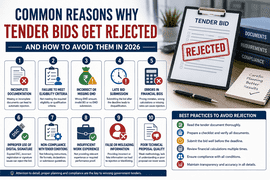
Winning a government or private sector tender can open new business opportunities and help companies secure long-term projects. However, many bidders face rejection despite investing significant time and effort in preparing their proposals. In most cases, tender bids are rejected due to avoidable mistakes rather than a lack of capability.
As competition in public procurement continues to grow in 2026, understanding the common reasons behind bid rejection has become essential for contractors, suppliers, consultants, and service providers. This guide explains the most frequent causes of tender rejection and provides practical tips to help businesses submit compliant and competitive bids.
Tender authorities evaluate bids based on strict eligibility criteria, documentation requirements, technical qualifications, and financial compliance. Even a minor error can result in disqualification. The objective of the evaluation process is to ensure fairness, transparency, and compliance with procurement rules.
By understanding the common mistakes bidders make, businesses can significantly improve their chances of success.
One of the leading reasons for tender rejection is the submission of incomplete documents.
Many bidders forget to attach essential certificates, declarations, affidavits, experience documents, financial statements, or registration certificates required by the tender authority.
A missing document can lead to automatic rejection, even if the bidder is otherwise qualified.
Every tender includes specific eligibility conditions related to experience, turnover, technical capability, manpower, equipment, or certifications.
Many companies submit bids without carefully checking whether they satisfy all eligibility requirements.
Applying for unsuitable tenders wastes valuable time and resources.
Earnest Money Deposit (EMD) serves as a security deposit for the tendering process. Incorrect EMD amounts, expired bank guarantees, or failure to submit EMD can result in rejection.
Always double-check payment details and submission instructions.
Many bidders wait until the last minute to upload documents on e-tender portals. Technical issues, slow internet connections, or digital signature problems can prevent successful submission.
Tender portals automatically reject submissions received after the deadline.
Financial bid mistakes are among the most costly errors in tendering.
Common issues include:
A single pricing error can eliminate an otherwise strong proposal.
Most government tenders require bids to be signed using a valid Digital Signature Certificate.
Expired DSCs, incorrect registrations, or signature mismatches often lead to technical rejection.
Technical compliance is just as important as commercial compliance.
Many bidders overlook specific instructions mentioned in the tender document.
Examples include:
Compliance is often the first stage of bid evaluation.
Several tenders require bidders to demonstrate experience in similar projects completed within a specific timeframe.
Submitting unrelated or inadequate experience records can result in rejection.
Experience documentation should be clear, organized, and verifiable.
Providing inaccurate turnover figures, forged certificates, fake experience claims, or misleading information can lead to immediate rejection and possible blacklisting.
Honesty and credibility are critical in public procurement.
Even when all eligibility conditions are met, a weak technical proposal can reduce the chances of success.
Common problems include:
A strong technical proposal can significantly improve evaluation scores.
To improve your chances of winning tenders in 2026, follow these best practices:
Keep all registrations, certificates, GST records, PAN details, financial statements, and licenses updated.
A structured checklist helps ensure nothing is overlooked.
Review technical, financial, and compliance documents before submission.
Stay informed about corrigenda, amendments, and deadline changes.
Professional bid preparation can improve accuracy and competitiveness.
Tender bid rejection is often the result of avoidable mistakes rather than a lack of capability. Incomplete documentation, eligibility issues, EMD errors, late submissions, pricing mistakes, and non-compliance with tender conditions remain some of the most common reasons for rejection in 2026.
Businesses that carefully review tender requirements, maintain accurate documentation, and follow a structured bidding process can significantly increase their chances of success. By learning from common mistakes and adopting best practices, contractors and suppliers can submit stronger bids, reduce rejection risks, and secure more government and private sector opportunities.
For organizations looking to stay updated with the latest tender opportunities across India, regularly monitoring tender portals and procurement platforms can provide a competitive advantage in the bidding process.
