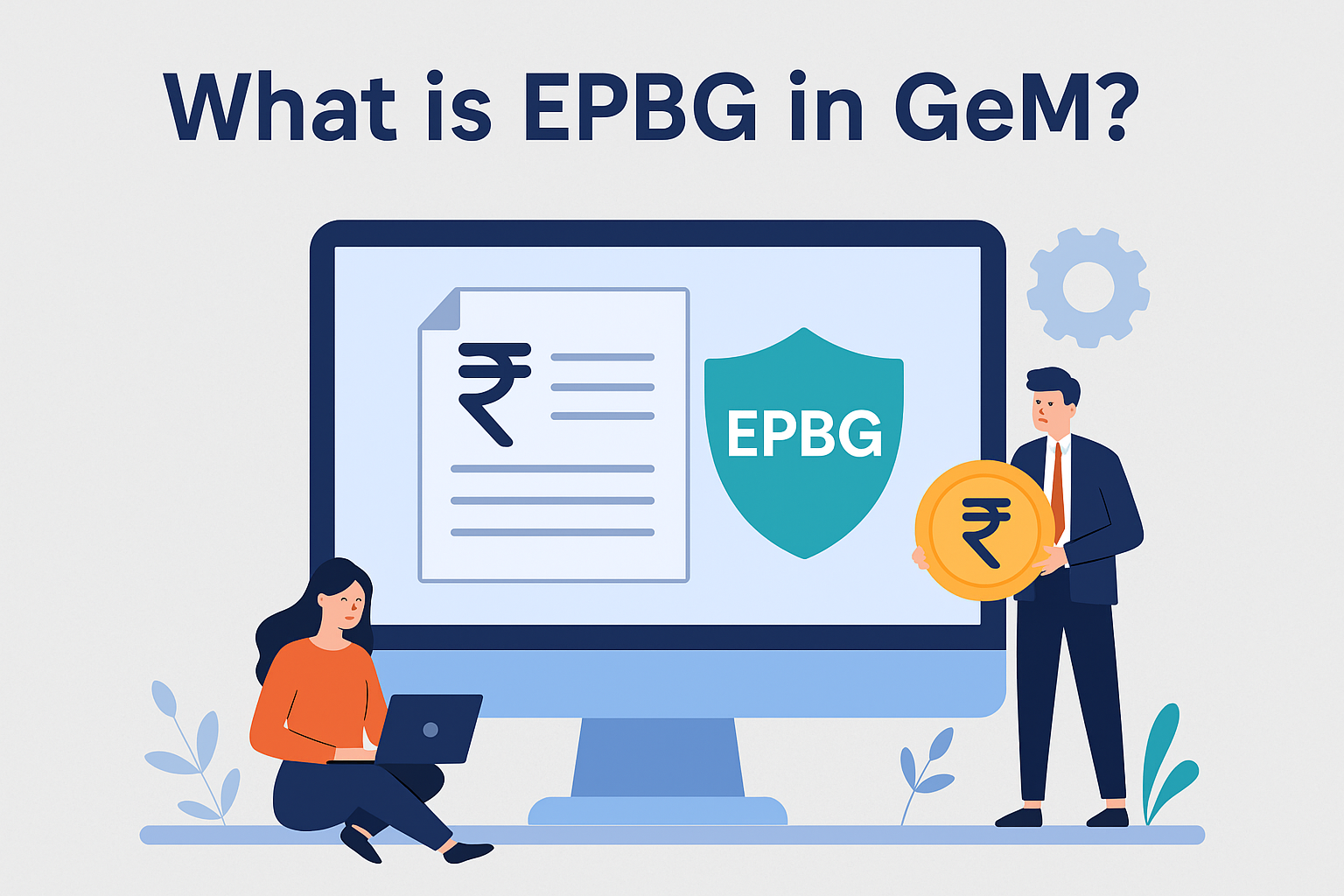
The Government e-Marketplace (GeM) has revolutionized public procurement in India by offering a transparent, efficient, and user-friendly digital platform. As more vendors and service providers register on GeM, it becomes crucial to understand the various requirements and compliance elements involved. One such important component is EPBG – Earnest Money Deposit through Performance-Based Bank Guarantee. In this article by Tender 18, we will explore what EPBG means in GeM, its significance, how it works, and how sellers and buyers can benefit from this system.
Speak with a GeM Expert Today – Call +91 7069661818 for Complete End-to-End Support |
|---|
EPBG stands for e-Performance Bank Guarantee. In the context of the GeM portal, EPBG is an alternative to the traditional Earnest Money Deposit (EMD) and Performance Security Deposit. It is a bank guarantee submitted electronically by the seller to assure the buyer that they will fulfill the contract terms. If the seller fails to deliver as promised, the bank guarantee can be invoked by the buyer to recover the loss.
The concept of EPBG was introduced to simplify and secure the procurement process on the Government e-Marketplace. Here’s why it matters:
EPBG acts as a financial safety net for buyers (government departments and PSUs) by ensuring sellers will comply with the contract. If the seller defaults, the buyer can claim the guaranteed amount.
Instead of freezing large amounts of working capital as a deposit, sellers can opt for a bank guarantee which typically requires a smaller cash margin.
Since EPBG is processed electronically and integrated with the GeM platform, it increases transparency and builds mutual trust between buyers and sellers.
| Feature | Description |
|---|---|
| Type | Bank Guarantee |
| Purpose | To assure performance against a GeM contract |
| Duration | Typically aligned with the delivery + warranty period |
| Amount | Usually a percentage of the contract value (as decided by the buyer) |
| Electronic Submission | Submitted through GeM portal via integrated banking partners |
Tender 18 explains the step-by-step process of submitting EPBG:
Once the seller wins a bid or receives a direct order, they will be required to submit the Performance Bank Guarantee (PBG) or EPBG as per the terms.
The seller logs in to the GeM portal and selects the awarded contract. Under the compliance section, an EPBG form is generated containing:
The seller approaches a bank that is integrated with GeM and shares the EPBG form for processing. The bank then issues the guarantee electronically.
The EPBG is uploaded by the bank directly into the GeM portal. GeM automatically validates it and notifies the buyer. The order then proceeds for fulfillment.
At Tender 18, we assist vendors in understanding and complying with GeM guidelines. Here’s how EPBG helps sellers:
Instead of locking working capital in the form of EMD or PBG, EPBG allows sellers to work with guarantees issued by their banks, which can be backed by a small margin.
Sellers don’t need to deposit large sums upfront, freeing up cash for operations, inventory, and logistics.
Smaller businesses and MSMEs can confidently bid on tenders without worrying about large EMD/PBG requirements.
| Factor | EPBG | EMD |
|---|---|---|
| Full Form | e-Performance Bank Guarantee | Earnest Money Deposit |
| Nature | Bank Guarantee | Cash Deposit |
| Purpose | Assures performance | Assures seriousness of participation |
| Usage | Post-order | Pre-bid |
| Refund | Not applicable unless invoked | Refundable after bid process ends |
While the EPBG format may vary slightly from bank to bank, GeM provides a standardized structure including:
The EPBG system in GeM has made government procurement more secure and efficient. By replacing bulky cash deposits with electronically managed bank guarantees, it protects buyers and benefits sellers. Whether you're a small vendor or a large enterprise, understanding how EPBG works is essential for compliance and successful contract execution. At Tender 18, we help suppliers and contractors navigate the complexities of government tenders, including GeM registrations, EPBG processes, bid submissions, and more. Stay updated with the latest procurement norms and grow your business confidently.
