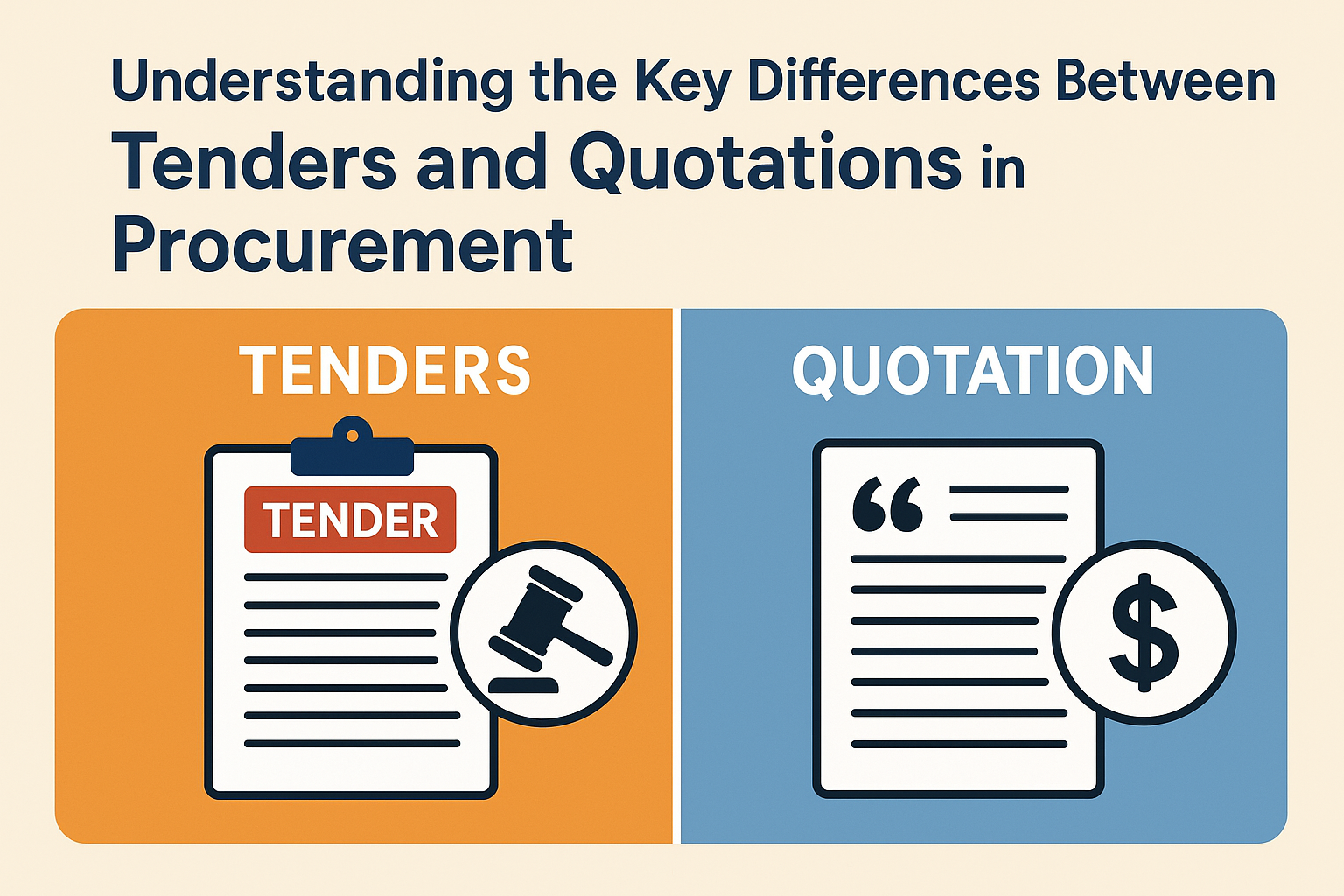
Procurement professionals must identify the correct acquisition approach between tenders and quotations to achieve transparency along with cost-effectiveness and quality standards. Public institutions usually apply two procurement procedures which include tenders and quotations. The two procurement approaches share similar meanings but function for specific objectives according to diverse market requirements. Understanding the Tender And Quotation Difference is vital for suppliers and buyers alike, as it ensures procurement compliance and fosters healthy competition throughout the procurement stage.
Hire Your Government Tender Consultant/ GeM Consultant Call - +91 7069661818 |
|---|
The article from Tender 18 provides a breakdown of procurement concepts including meaning along with processes and use cases and major distinctions between tenders and quotations for better method understanding.
Public institutions and private firms along with government departments make use of tenders as structured formal procedures to obtain supplier or contractor proposals for goods and services and works. When authorities start the tender process they publish a Notice Inviting Tender (NIT) that contains project specifications and terms alongside evaluation requirements and time limits.
The tendering system serves for both important purchases and intricate contract requirements because it operates within specific regulations to maintain visible operations and equal bidding potential.
Open Tender – Anyone can submit a bid.
Limited Tender – Sent to pre-qualified or shortlisted vendors.
E-Tender – Conducted through an online portal.
Global Tender – Open to international bidders.
A quotation is a more informal method of procurement used mainly for routine or low-value purchases. It involves inviting quotation from a limited number of vendors or service providers. The buyer requests a quote for tender (or simply a quote) that outlines the price, delivery schedule, and terms.
Quotations are usually sought when the scope of work is straightforward and doesn’t require a lengthy evaluation process. Unlike tenders, quotations do not require detailed documentation or public announcements.
Verbal Quotation – Given orally for very small purchases.
Written Quotation – A formal document with itemized pricing.
Email or Online Quotation – Quick and efficient for small-scale requirements.
Let’s delve into the difference between tender and quote across various aspects of the procurement process:
| Aspect | Tender | Quotation |
|---|---|---|
| Purpose | Used for high-value or complex procurements | Used for routine, low-value purchases |
| Process | Formal, structured, and governed by strict rules | Informal and simple |
| Advertisement | Publicly advertised via NIT or eProcurement portals | Usually sent directly to known vendors |
| Documentation | Detailed bid documents with specifications, terms, eligibility | Simple price proposal or offer |
| Evaluation | Involves multiple stages – technical, financial, compliance checks | Based mainly on price and availability |
| Timeline | Longer duration – can take weeks or months | Short duration – often completed in days |
| Legal Binding | Legally binding upon acceptance | Becomes binding only after the issuance of a purchase order |
| Transparency | High – ensures fair competition and accountability | Moderate – suitable for limited sourcing needs |
| Usage | Government contracts, infrastructure projects, complex services | Office supplies, maintenance work, minor repairs |
You should opt for a tender when:
The procurement value is high (e.g., ₹10 lakh or more).
The goods/services are complex or require detailed evaluation.
Transparency and public accountability are mandatory (e.g., government spending).
Competitive bidding is necessary to ensure the best value.
For instance, public sector undertakings in India must follow tendering procedures for major purchases under guidelines from the Central Vigilance Commission (CVC) and General Financial Rules (GFR).
You can use quotations when:
The value of purchase is low (e.g., under ₹1 lakh).
The scope is simple and well-defined.
There’s an existing list of approved or empaneled vendors.
Immediate procurement is needed without lengthy procedures.
Quotations are common in small office purchases like stationery, hardware maintenance, or short-term manpower hiring.
Many professionals mistakenly assume a "quotation for tender" or a "quote for tender" are the same. However, in procurement terminology:
A quotation is a standalone proposal in response to a price request.
A quote for tender could refer to the pricing component submitted as part of a tender response.
Therefore, while quotations may be submitted in both processes, the context and format differ significantly.
Pros:
High transparency
Ensures best value
Open to wider competition
Cons:
Time-consuming
Costly to prepare bids
Bureaucratic process
Pros:
Quick turnaround
Low paperwork
Ideal for urgent needs
Cons:
Limited competition
Risk of bias or favoritism
Less scrutiny of vendors
At Tender 18, we recommend the following best practices:
Use thresholds – Define clear monetary limits for when to use tenders versus quotations.
Vendor prequalification – Even for quotations, maintain a list of vetted suppliers.
Maintain records – For audit trails, record all communications and quotations.
Use e-Procurement platforms – This ensures traceability even in quotation-based purchases.
Stay updated – Monitor public procurement guidelines and adapt your policies accordingly.
Both tenders and quotations have their unique place in procurement. Selection between quotations and tenders depends on whether the purchase has high value or complexity as well as a pressing deadline. The procurement method of tenders delivers superior transparency together with competitive prices during large-scale acquisition but quotations excel at speedy handling of smaller frequent purchases.
Businesses can achieve better procurement decisions and operational efficiency with complete industry practice compliance through their understanding of tender versus quote distinctions.
Tender 18 provides organizations an effortless solution to examine the tendering system. Whether you’re looking to float a tender or invite quotations from reliable vendors, our platform offers accurate, timely information and expert insights to guide your procurement journey.
