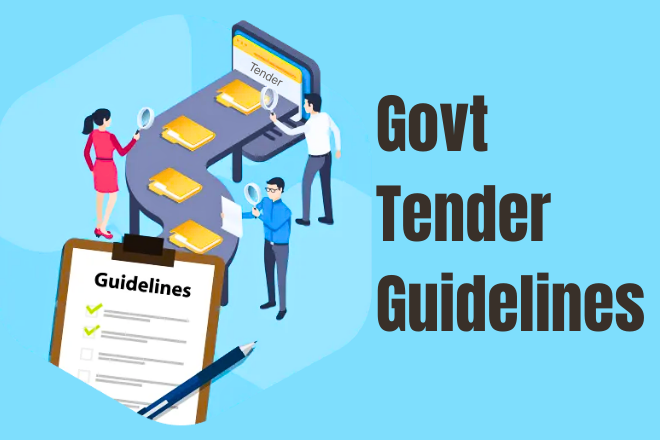
Bidding on government tenders is one of the best ways for businesses to gain consistent major work. However, the critical help in winning will be gaining solid understanding on the tender guidelines issued by government authorities. These guidelines not only define the eligibility criteria and submission process but also set the expectations, legal framework, and evaluation procedures. In this guide, Tender 18 walks you through everything you need to know about government tender guidelines and how to use them to ensure successful bidding.
Get Government Tender Guidelines Support, Registration Assistance & Tender Bidding Help Call - +91 7069661818 |
|---|
Government tender guidelines are Regulatory Bureau guidelines given by government authorities when inviting bids for public procurement. These guide-lines cover the process of bidding from beginning to end - advertisement, submission, evaluation, and awarding of contracts, and post-award monitoring.
They seek to promote transparency, fair competition and value for money procurement. Under the larger umbrella of the policies like General Financial Rules (GFR), Manual for Procurement of Goods/Works and e-Procurement protocol all departmental governments or PSUs in India abide by these guidelines.
Many businesses fail to secure tenders not because they lack capability but because they overlook or misinterpret essential clauses in the tender document. Here’s why understanding the guidelines is vital:
At Tender 18, we help bidders dissect complex tender documents and align their bids with every requirement for maximum chances of success.
Let’s break down the typical structure of a government tender and the core components of its guidelines:
This section outlines the basic and specific qualifications a bidder must meet:
This part specifies the scope of work, materials, technology standards, and performance benchmarks. Understanding these ensures you propose a technically viable solution.
Details such as:
You must account for these in your financial planning.
Instructions on:
Tender authorities assess bids on:
This section includes:
Understanding tender guidelines is part skill, part strategy. Here’s how you can master it:
Don’t skip sections — read even the annexures, formats, and footnotes.
Mark mandatory conditions like eligibility documents, EMD, and affidavit formats. Missing these can disqualify your bid.
Create a document-wise checklist to track your submission status and cross-check before the deadline.
These meetings help clarify ambiguities in tender terms. They’re also a chance to suggest changes and understand competition.
Consulting platforms like Tender 18 can help you avoid costly errors and improve bid quality.
Even experienced bidders make errors that can cost them the contract. Here are common pitfalls:
At Tender 18, we monitor all tender updates and alert our clients of any changes so they can respond appropriately.
To win more government contracts, follow these expert tips:
Tender opportunities are time-bound. Subscribe to platforms like Tender 18 for real-time notifications in your business category.
Have your certificates, registrations, work experience, and financial documents updated and ready to go.
Instead of competing in crowded sectors, target tenders where your strengths give you an edge.
If you qualify, register under the Udyam MSME scheme to avail exemptions on EMD and tender fees.
Study winning bids, competitor pricing, and authority preferences to refine your strategy.
At Tender 18, we specialize in simplifying the government tender process. Our services include:
Whether you’re a startup, MSME, or a large enterprise, Tender 18 ensures you're always tender-ready and compliant.
Government tender guidelines understanding is the bedrock of a winning bidding journey. Sensitivity to details, and quick action and planning are needed to carry it out. With proper analysis of every aspect of the guidelines—eligible to evaluating—you improve your chances of securing high-value contracts. Partnering with key players such as Tender 18 will keep you abreast and competitive of what’s happening in the dynamic world of public procurement.
